


How to see people through God's eyes Part 2/3.

Updated: Aug 3
What Value Does God Place on Each Human Life?
Today, let's explore the profound value God places on each human life. We will delve into Scripture and insights from C. S. Lewis’ The Four Loves. Together, we can uncover the beauty and significance of every soul.
A. Humanity Bears the Image of God
Genesis 1:26 (KJV) states, “And God said, Let us make man in our image, after our likeness…” This foundational truth reveals that the value of humanity begins at creation. Every human being possesses inherent dignity because we are made in the image of God.
This truth applies universally:
The rich and the poor
The weak and the strong
The elderly and the unborn
The righteous and the sinner
Every race and nation
People are not mere accidents of biology; they are eternal souls.
In our world, value is often measured by:
Wealth
Beauty
Intelligence
Achievement
Power
Social status
Yet, God measures value by eternal reality. Jesus asked, “For what is a man profited, if he shall gain the whole world, and lose his own soul?” — Matthew 16:26 (KJV). One soul is worth more than the entire world!
B. The Cross Reveals Human Worth
1 Peter 1:18–19 (KJV) tells us, “Ye were not redeemed with corruptible things, as silver and gold… But with the precious blood of Christ…” The value of something is shown by the price paid for it. God valued humanity so greatly that Christ shed His blood for sinners.
The cross reveals two vital truths:
The seriousness of sin
The immeasurable value God places upon souls
No one is insignificant to God. Jesus sought out those whom society often overlooked:
The leper
The outcast
The tax collector
The Samaritan woman
The thief on the cross
He saw eternal value where others saw rejection.
C. S. Lewis on Love and Human Worth
C. S. Lewis, in The Four Loves, identified four categories of love that help explain both the beauty and limitations of human affection.
1. Storge — Affection
This is natural affection, encompassing:
Family love
Familiarity
Tenderness
Everyday care
While this love can be beautiful, it can also become possessive or controlling when corrupted by selfishness.
2. Philia — Friendship
Friendship is companionship built around shared vision, interest, or purpose. Lewis considered friendship one of life’s great gifts because it unites people around truth and common pursuits. Biblically, David and Jonathan illustrate deep covenant friendship.
3. Eros — Romantic Love
This refers to romantic and marital love. God created marriage as sacred and good. However, Lewis warns that romantic love can become destructive when idolised or detached from God. Human love was never designed to replace God.
4. Agape — Divine Love
Agape is the highest form of love. It is:
Self-giving
Sacrificial
Unconditional
Rooted in God Himself
This is the love demonstrated by Jesus Christ. Lewis emphasised that natural loves become dangerous when they become gods. Only divine love can purify and rightly order human loves.
Without God:
Affection can become manipulation
Friendship can become exclusion
Romance can become idolatry
But when surrendered to God, human loves become expressions of grace.
D. Additional Insight From C. S. Lewis on Human Worth
C. S. Lewis made a profound observation about the eternal value of human beings in his sermon, The Weight of Glory. He wrote that if we were to see the glory of an ordinary believer as they will one day appear in eternity, we would be strongly tempted to worship them. Lewis was not encouraging the worship of people, but emphasising the breathtaking eternal destiny prepared for redeemed humanity.
He reminded us that we never meet a “mere mortal.” Every person we encounter is an eternal being who will exist forever, either in the glory of God’s presence or separated from Him. This understanding radically changes how we should treat others.
Lewis famously stated, “There are no ordinary people. You have never talked to a mere mortal.” From God’s perspective, every soul carries eternal significance. The stranger, the weak, the difficult person, the unnoticed individual, and the broken sinner are all beings of immense eternal value. This understanding should inspire humility, compassion, reverence, and deep care in how we view, speak to, and treat others.
E. God Sees What Humans Cannot See
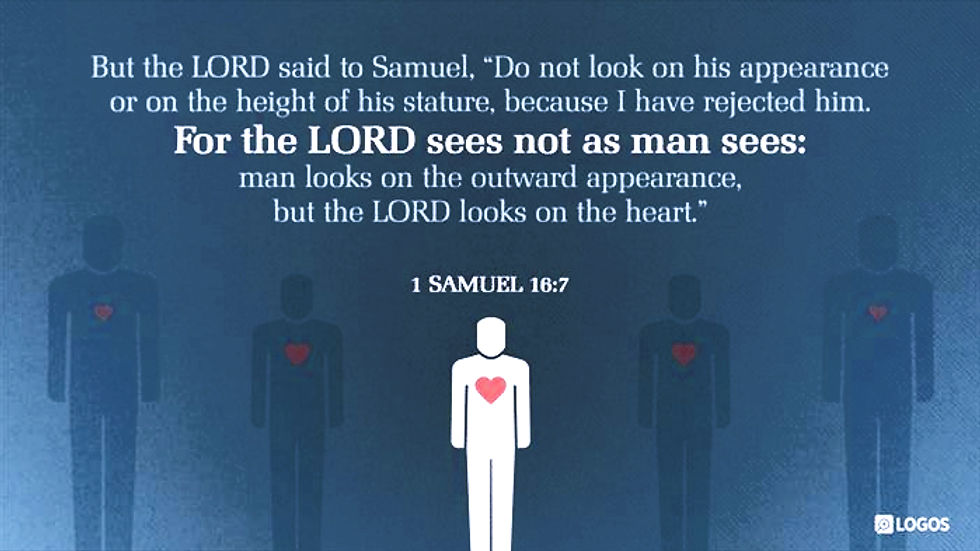
1 Samuel 16:7 (KJV) reminds us, “For the Lord seeth not as man seeth; for man looketh on the outward appearance, but the Lord looketh on the heart.” Human beings often judge by outward appearance, but God looks deeper.
When Samuel saw David, he overlooked him, but God saw a king. Others saw:
Moses as a fugitive
Gideon as weak
Rahab as immoral
Peter as unstable
Matthew as corrupt
God saw redeemed potential. This is how divine love sees people, and it is also the way we ought to see them too!
F. Practical Steps to See People as God Sees Them
In our final section, we will explore practical steps necessary to begin to see people as God sees them.
Practice Empathy: Try to understand others' feelings and perspectives. This can help us appreciate their struggles and joys.
Engage in Active Listening: When someone speaks, listen fully. This shows respect and acknowledges their worth.
Value Every Encounter: Remember that every person you meet is an eternal being. Treat them with the dignity they deserve.
Pray for a Heart Change: Ask God to help you see others through His eyes. This can transform your relationships.
Serve Others: Find ways to serve those around you. Acts of kindness can reflect God's love and value for each person.
Amen
Personal Prayer: May we all strive to see the immense worth in every individual, reflecting God’s love in our interactions. Let us remember that every soul is precious in His sight.


Comments